Payment Rails and Promotional Timing Strategies in Provider-Driven VIP Ecosystems for Sports Bettors
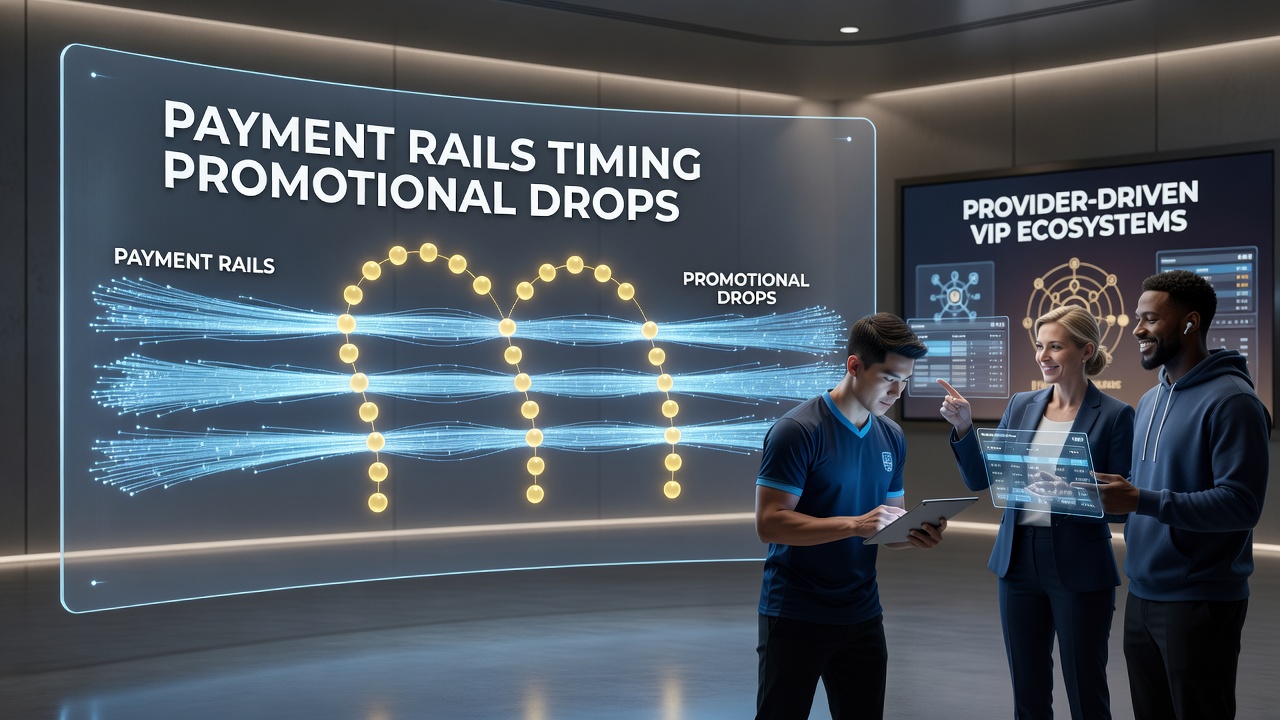 Payment rails determine how quickly funds move between accounts and betting platforms, and their processing windows directly influence when providers release targeted promotions to sports bettors in VIP structures. Different rails operate on distinct schedules: real-time systems complete transfers in seconds while batch methods process overnight or across multiple business days. Providers that manage integrated VIP programs track these timelines to coordinate promotional drops such as enhanced odds, cashback credits, and loyalty multipliers so they reach eligible accounts at moments when deposit activity peaks. Data from transaction monitoring services shows that sports bettors using instant rails receive promotional notifications within minutes of funding completion, whereas those relying on standard bank transfers often see offers arrive after a 24- to 48-hour delay. This difference affects participation rates because time-sensitive promotions tied to specific matches or tournaments expire quickly. Providers therefore segment VIP tiers according to preferred payment methods, ensuring that higher-value users on faster rails receive advance notice of upcoming drops.
Payment rails determine how quickly funds move between accounts and betting platforms, and their processing windows directly influence when providers release targeted promotions to sports bettors in VIP structures. Different rails operate on distinct schedules: real-time systems complete transfers in seconds while batch methods process overnight or across multiple business days. Providers that manage integrated VIP programs track these timelines to coordinate promotional drops such as enhanced odds, cashback credits, and loyalty multipliers so they reach eligible accounts at moments when deposit activity peaks. Data from transaction monitoring services shows that sports bettors using instant rails receive promotional notifications within minutes of funding completion, whereas those relying on standard bank transfers often see offers arrive after a 24- to 48-hour delay. This difference affects participation rates because time-sensitive promotions tied to specific matches or tournaments expire quickly. Providers therefore segment VIP tiers according to preferred payment methods, ensuring that higher-value users on faster rails receive advance notice of upcoming drops.Processing Windows Across Major Rails
Several rails dominate sports betting deposits and withdrawals. Faster Payments Service in the UK and similar instant systems elsewhere settle in under ten seconds. SEPA Instant Credit Transfers in Europe achieve similar speeds during operating hours. Traditional ACH and wire transfers in North America typically require one to three business days. Crypto rails vary by network congestion but can confirm within minutes when using low-fee protocols. Observers note that providers adjust promotional calendars around these windows. A football match starting at 15:00 local time may trigger an odds-boost promotion released at 14:30 for users whose deposits clear instantly, while the same promotion reaches slower-rail users earlier in the day to allow processing time. This staggered approach maintains fairness across the VIP base and maximizes engagement.Provider Management of VIP Segmentation
Game providers that power both casino and sports verticals often control the backend systems handling VIP loyalty programs. These operators maintain detailed user profiles that include historical payment rail usage, average deposit size, and response rates to past promotions. Algorithms within these systems flag accounts for specific drops based on predicted clearance times. For example, a provider might schedule a mid-week accumulator bonus exclusively for accounts that completed deposits via real-time rails during the prior 48 hours. Users on slower rails receive a different incentive with a longer validity window. This segmentation reduces support tickets related to missed promotions and improves retention metrics reported by platform operators.