Strategies Game Providers Deploy When Merging Table Incentives with Mobile Sports Markets

Game providers have developed unified player accounts that track activity across table games and sports markets on the same mobile application, allowing points earned from blackjack sessions or roulette spins to convert directly into free bets on upcoming football matches or tennis tournaments. These systems rely on real-time data synchronization so that a completed hand at a virtual poker table immediately updates the available balance for placing wagers on live events.
Unified Loyalty Frameworks Across Game Types
Providers build single loyalty ledgers that assign values to both table outcomes and sports results, then apply tiered multipliers when users combine participation in both categories within a single session. Data collected through these platforms shows that players who engage with table games in the morning often receive targeted prompts later in the day for sports markets that align with their previous play patterns. By May 2026 several major suppliers had rolled out cross-category bonus structures where table game winnings automatically generate sports-specific tokens valid only on mobile devices.
Technical Integration of Live Tables and Odds Feeds
Backend engines connect live dealer streams with sports data providers so that odds for in-play markets appear alongside active table sessions without requiring users to switch applications. Developers use application programming interfaces that pull statistics from multiple sports leagues while simultaneously managing card shuffles and chip movements on the same screen layout. This approach reduces load times and keeps users inside one environment where rewards from table play can fund sports stakes in a few taps.
Mobile-Specific Reward Delivery Mechanisms
Push notifications triggered by table game milestones direct attention toward sports opportunities that carry enhanced payout structures for a limited window. Location-based features activate when users enter certain geographic zones, unlocking table rewards that double as sports deposit bonuses available only through the handheld app. Providers also employ progressive jackpots that accumulate across both verticals, releasing portions of the pool when a sports wager placed with table-derived credits succeeds.
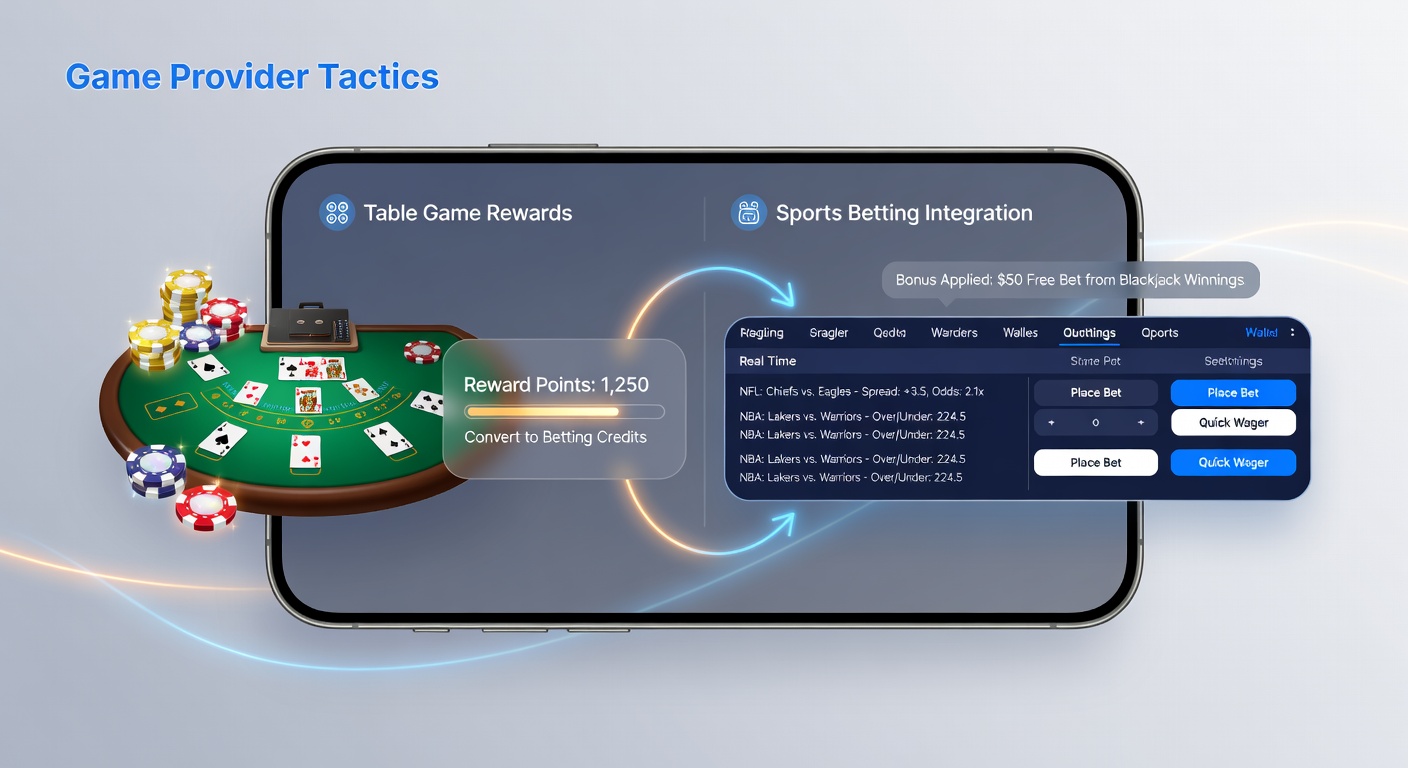
According to figures released by the American Gaming Association, mobile sports betting volumes increased substantially once platforms introduced seamless credit transfers from table game accounts. Observers note that these transfers occur without additional fees when conducted inside the native application, which encourages repeated movement between the two categories.
Regulatory Compliance in Cross-Vertical Systems
Operators maintain separate ledgers for table game and sports activity to satisfy requirements set by bodies such as the Nevada Gaming Control Board, even while presenting a single balance view to the player. Audit trails record every point conversion so that regulators can verify that rewards originating from table play comply with sports betting rules in each jurisdiction. Providers update these systems quarterly to reflect changes in licensing conditions across different regions.
Case Examples of Provider Implementation
One supplier introduced a system where every ten hands played at mobile blackjack tables generated a sports free bet token with a minimum stake requirement, and users who redeemed those tokens on basketball games received additional table game credits if the wager settled successfully. Another provider partnered with data analytics firms to predict when table players were most likely to engage with live sports markets, then timed reward drops accordingly. Research published in the Journal of Gambling Studies indicates that such timed incentives raised session lengths across both verticals without altering overall spending patterns.
Future Development Pathways
Engineers continue to refine machine learning models that analyze combined table and sports histories to suggest personalized reward bundles. These models factor in device type, connection speed, and time of day to optimize when offers appear on screen. As more jurisdictions authorize mobile sports betting alongside table games, providers adjust their architectures to maintain compliance while preserving the unified experience users expect.
Conclusion
Providers achieve integration through shared loyalty structures, synchronized data feeds, and mobile-optimized reward triggers that respect regulatory boundaries in each market. The resulting platforms allow table game activity to influence sports betting opportunities and vice versa, creating measurable shifts in how users allocate play time across categories. Continued technical refinement and adherence to oversight requirements shape the pace at which these blended systems expand.